


Introduction To 37500-PLC-015 Crankshaft Position Sensor
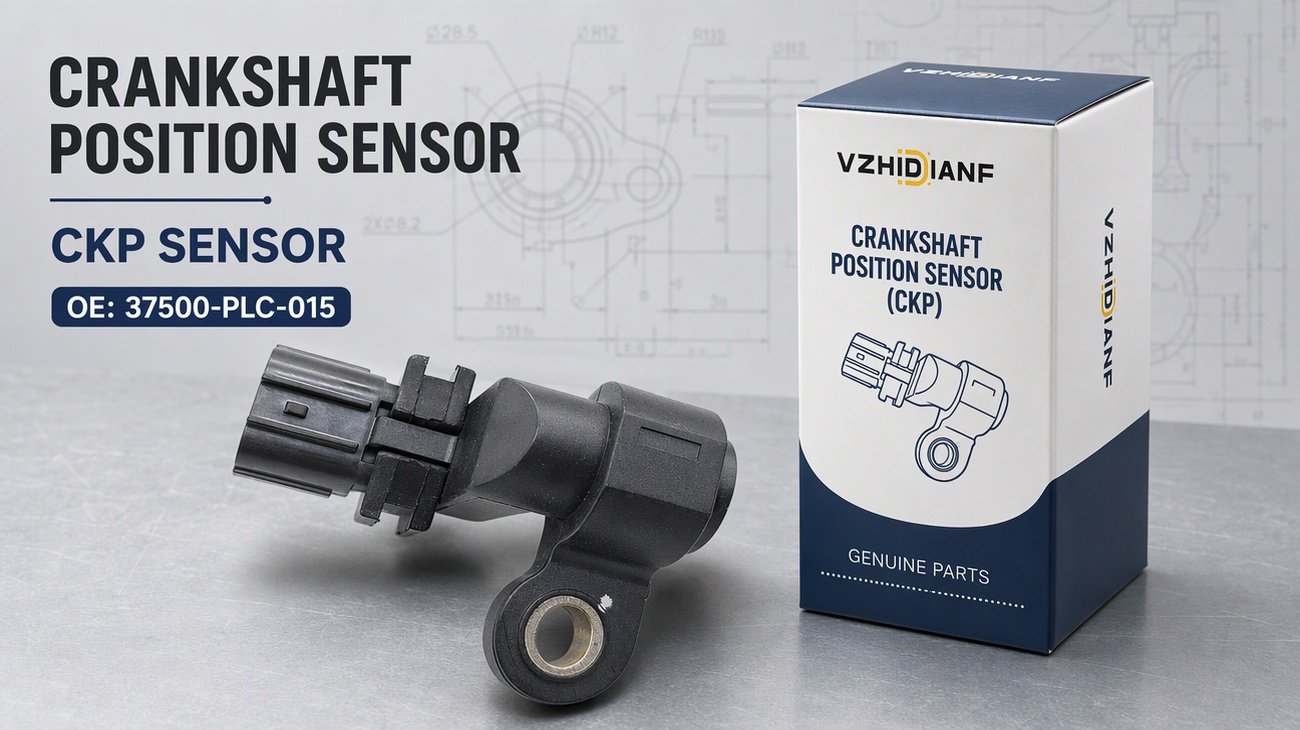
Сайт 37500-PLC-015 is an standard 3-pin engine crankshaft position (CKP) sensor assembly engineered specifically for 7th-generation compact passenger vehicles powered by 1.7L D-series engines. Serving as a direct aftermarket replacement for reference part numbers 37500-PLC-015 (superseding 37500-PLC-005) and aftermarket cross-reference codes PC477, 5S1767, SU5582, и 196-2001, this sensor includes the style bracket, heat-shielded pigtail wire harness, and 3-pin locking connector. It is engineered for exact compatibility with for Honda Civic (2001–2005 1.7L DX, EX, GX, HX, LX, Value Package trims) and for Acura EL (2001–2005 1.7L Touring / Premium).
37500-PLC-015 utilizes solid-state Hall-effect magnetic sensing technology. Mounted behind the lower timing belt cover adjacent to the crankshaft sprocket, the sensor continuously monitors the multi-tooth reluctor wheel to deliver crisp square-wave digital frequency pulses to the Engine Control Module (ECM / PCM). The engine computer utilizes these high-speed signals to compute engine rotational RPM, identify cylinder #1 Top Dead Center (TDC), synchronize sequential multi-port fuel injection, command ignition coil dwell, and regulate VTEC engagement on D17A2 engines.
Список совместимых автомобилей и оригинального оборудования
Ниже приведен полный перечень моделей автомобилей, на которые распространяется данное предложение, а также номера взаимозаменяемых оригинальных запчастей для вашего удобства.
| Vehicle Make | Модель автомобиля | Модельные годы | Смещение |
|---|---|---|---|
| Honda | Civic DX / LX / VP | 2001–2005 | 1.7L (1668cc) |
| Honda | Civic EX | 2001–2005 | 1.7L (1668cc) |
| Honda | Civic HX | 2001–2005 | 1.7L (1668cc) |
| Honda | Civic GX | 2001–2005 | 1.7L (1668cc) |
| Acura | EL (Base / Premium / Touring) | 2001–2005 | 1.7L (1668cc) |
| OE Part Numbers | 37500-PLC-015 / 37500PLC015 / 37500-PLC-005 / 37500PLC005 | ||
Compliance Notice: All vehicle brand names, model designations, and engine codes listed below are referenced strictly to provide technical fitment and compatibility information.
Wholesale Trading Terms
Минимальный объем заказа (MOQ)
Our 37500-PLC-015 crankshaft position sensor(CKP), standard minimum MOQ is 10 pieces per model. We also accept mixed orders of different sensor models to meet your diverse sourcing needs.
Время доставки
For all in-stock crankshaft position sensor(CKP), we can arrange shipment within 3-7 business days. For large-volume wholesale orders, the production and delivery cycle is approximately 20 to 25 business days.
Гарантийная политика
All 37500-PLC-015 crankshaft position sensor(CKP) come with a 12-month factory quality warranty. If any manufacturing defects occur during the warranty period, we will provide a free replacement.
Услуги по производству под брендом OEM и под частной торговой маркой
Наша фирменная упаковка может быть адаптирована с учетом размеров, сырья и технологий упаковки в соответствии с потребностями различных региональных рынков. Кроме того, мы предлагаем гибкие и надежные партнерские условия производства для глобальных оптовиков, дистрибьюторов, крупных покупателей и торговых компаний. Одним словом, мы предоставляем комплексные услуги по созданию частных торговых марок, включая лазерную гравировку логотипов, изготовление индивидуальных этикеток для продукции, упаковку в герметичные пластиковые пакеты и печать на цветных коробках.

Руководство по профессиональной установке
- Safety Preparation: Switch off the vehicle ignition, remove the key, and disconnect the negative battery terminal.
- Access the Timing Cover Area: Support the engine, remove the left front wheel, splash shield, and auxiliary drive belts (alternator and power steering).
- Remove Crankshaft Pulley & Covers: Remove the crankshaft harmonic balancer pulley and unbolt the lower timing belt cover to expose the CKP sensor mounted beside the crankshaft timing belt gear.
- Disconnect Harness: Follow the sensor wire pigtail up to the main engine harness bracket and unclip the 3-pin electrical plug.
- Remove Old Sensor: Remove the 10mm mounting bolt securing the sensor bracket to the oil pump housing / engine block and detach the old sensor assembly.
- Установите новый датчик: Position the new 37500-PLC-015 sensor onto the mounting boss, reinstall the 10mm bolt, and torque to factory specifications (approx. 9.8 Nm / 7.2 lb-ft).
- Route Wiring Loom & Reassemble: Carefully route the pigtail harness into its designated plastic guide channels so it cannot contact the moving timing belt. Reinstall the timing belt covers, crankshaft pulley, drive belts, and reconnect the battery. Clear historical OBD-II codes using a diagnostic scan tool.
Центр помощи
ЧАСТО ЗАДАВАЕМЫЕ ВОПРОСЫ
Q1: What specific function does the 37500-PLC-015 CKP sensor perform on for Honda Civic 1.7L D17 engines?
A: For Honda Civic 1.7L D17 engines, 37500-PLC-015 detects crankshaft sprocket reluctor teeth to provide rotational speed and position data. The PCM uses this signal to synchronize multi-port fuel injection и command ignition timing. It also uses it to regulate VTEC engagement on D17A2 engines.
Q2: Why are part numbers 37500-PLC-015 and 37500-PLC-005 completely interchangeable?
A: 37500-PLC-015 is the official engineering supersession for earlier part number 37500-PLC-005. Both share the exact same mounting bracket dimensions, 3-pin pigtail harness length, and connector pinout. Additionally, both feature identical Hall-effect square-wave output calibration curves.
Q3: What OBD-II diagnostic fault codes and driving symptoms indicate a failing 37500-PLC-015 sensor?
A failing sensor triggers diagnostic trouble codes P0335, P0336, или Honda-specific code P1361. Common driving symptoms include prolonged engine cranking, sudden engine stalling when warm, и erratic tachometer operation. Additional signs are loss of acceleration power and check engine light illumination
Q4: Why do crankshaft position sensors for 2001-2005 Civic engines often fail intermittently when hot?
Located behind the timing belt cover, the sensor experiences severe heat cycles. Over time, internal Hall-effect micro-circuitry and solder joints expand when the engine reaches operating temperature. This expansion breaks signal continuity until the engine bay cools down